
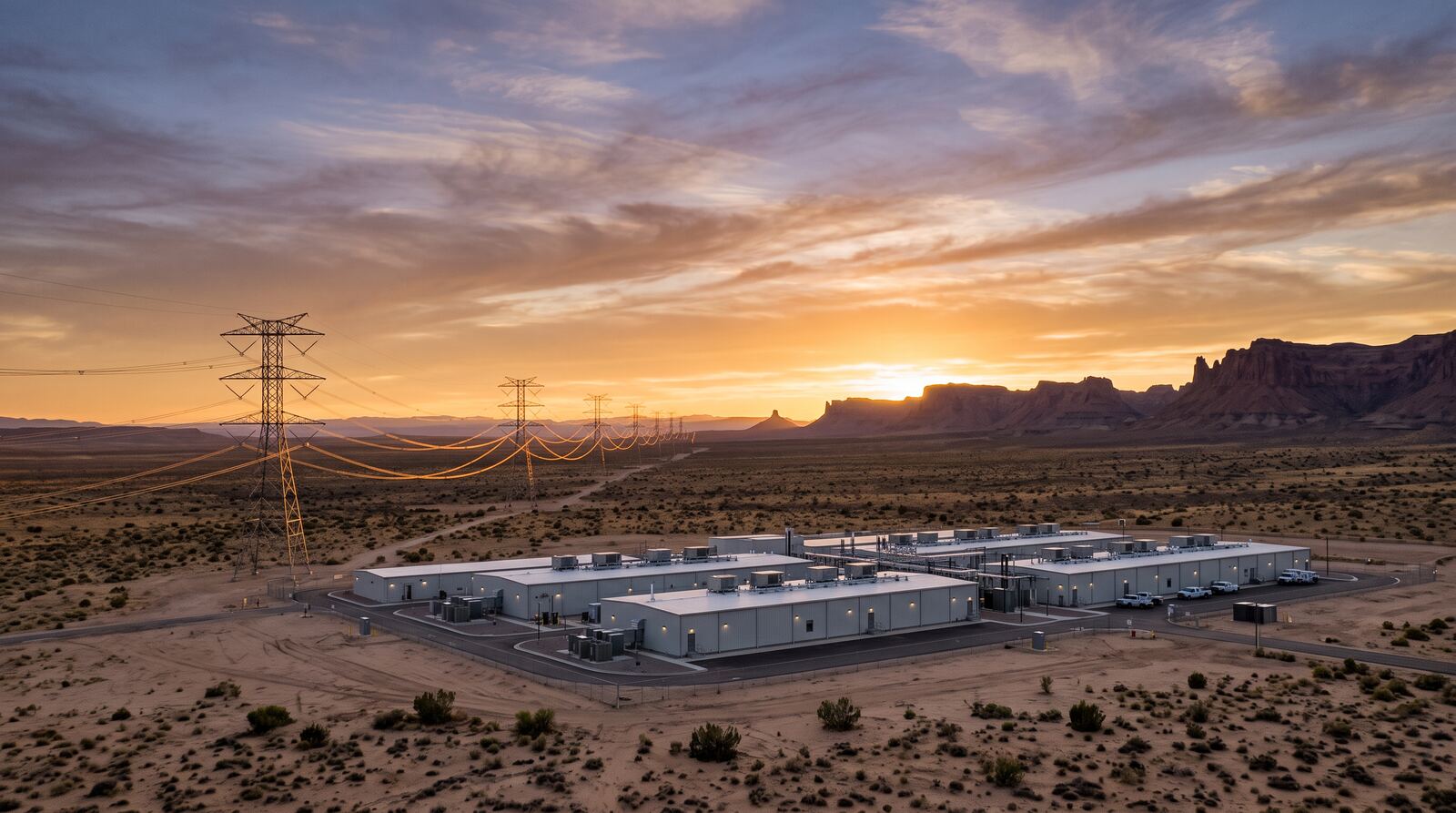
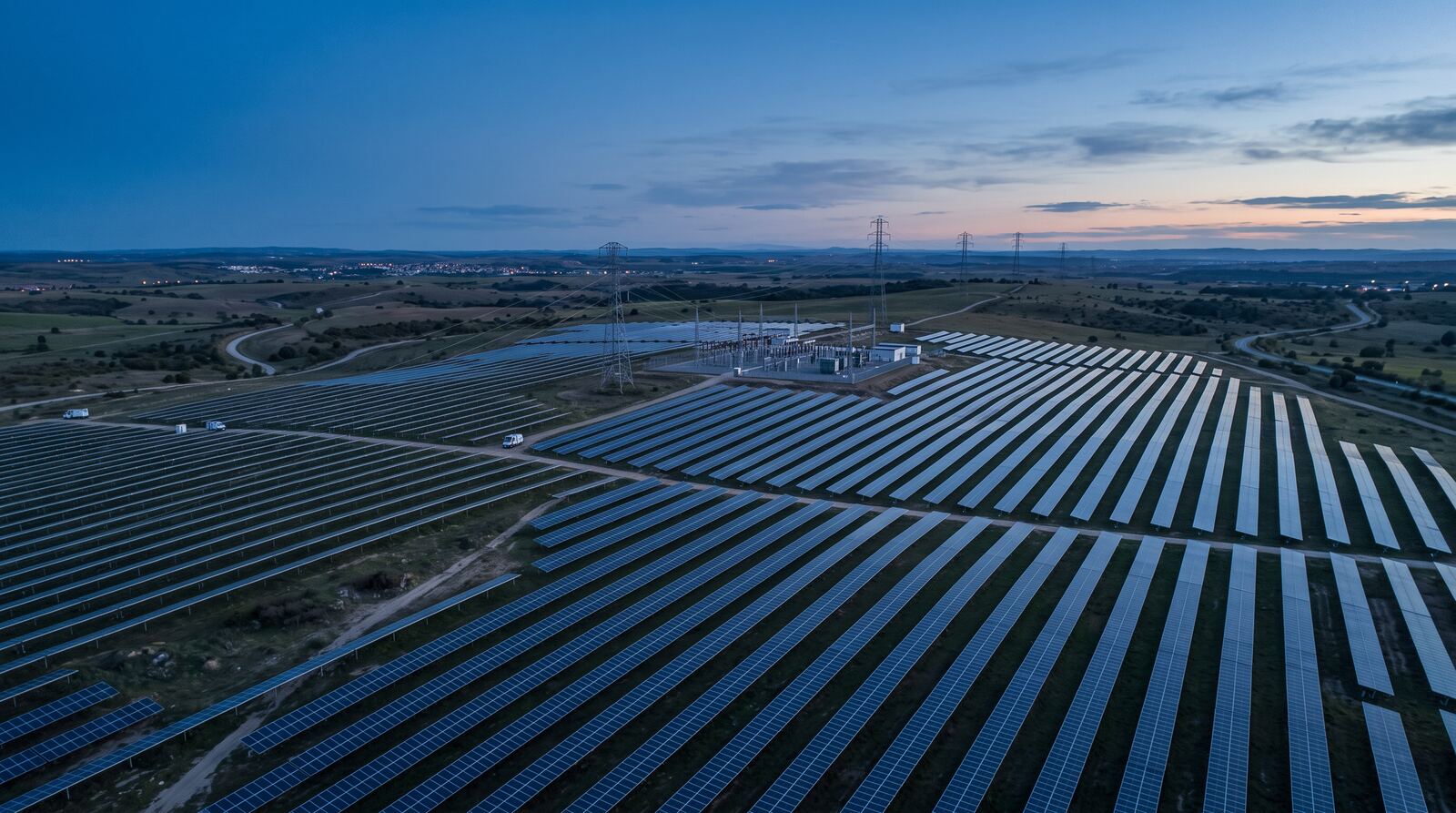

Conceptual visualization of a data center campus in a wide desert landscape at sunset, with transmission lines and mesas on the horizon. Conceptual visualization of a large solar farm and substation at blue hour.
Conceptual visualization — not an actual Turnstone Digital project.

Responsible AI infrastructure Development

Energy Efficient Infrastructure

Harnessing Renewables. Conserving Water.

Turnstone Digital integrates power strategy, energy- and resource-efficient infrastructure design and responsible site development to support the next generation of AI. Our approach brings together electrical systems, cooling, connectivity and compute requirements to deliver capacity thoughtfully and use energy and water responsibly.

The next chapter of AI depends on power, resource efficiency and community support — not only on chips and code.

Our mission

To accelerate next-generation computing by developing responsibly sited AI infrastructure that combines timely access to power with energy- and resource-efficient design, treating water stewardship as a core consideration from the outset.

Why it matters

Demand for advanced compute is growing faster than the infrastructure that supports it. Access to power remains critical — but so do the energy and water a facility uses, the suitability of the buildings and land it occupies, and the support of the community around it.

We believe the most durable AI infrastructure will pair realistic pathways to power with design that aims to get more useful compute from every megawatt, while using water and other local resources responsibly.

Power, resources and place shape AI capacity together

  1. APower accessUtility capacity, interconnection and site readiness often set the critical path.
  2. BEnergy and waterElectrical and cooling design determine how efficiently a site turns power and water into compute.
  3. CSite and communitySuitable buildings, land, permitting and local support must align before capacity can scale.

Three priorities. One objective: accelerating next-generation computing.

  1. 01

    Speed to power

    We look for realistic pathways to power — utility capacity, interconnection and site readiness — and build delivery plans around them rather than best-case assumptions.

  2. 02

    Energy and resource efficiency

    With engineering and technology partners, we coordinate electrical distribution, cooling, water and workload-appropriate compute requirements, so each site is designed to make efficient use of the energy and water it draws.

  3. 03

    Responsible development

    Thoughtful reuse of existing sites and buildings, early community engagement, attention to noise and visual impacts, and careful stewardship of local resources.

A disciplined path from site to compute.

Our development approach is sequenced to reduce risk early, design for both the workload and the place, and carry decisions through to execution with rigor.

  1. Step 01

    Evaluate power, water and site alignment

    Screen locations where power, water, existing buildings, fibre and community context can align.

    • Utility, interconnection and site-readiness assessment
    • Water availability and cooling-related water demand
    • Land use, existing structures, zoning and early stakeholder conversations
  2. Step 02

    Design for workload, efficiency and place

    Shape infrastructure around the compute it will serve and the setting it sits within.

    • Inference or training workload requirements
    • Power, cooling and compute coordinated with engineering and technology partners
    • Air, direct-to-chip or immersion cooling considered per site and workload, including heat rejection
    • Layouts that respect setbacks, sightlines and sound
  3. Step 03

    Execute with discipline

    Phase capacity with demand and move from plan to delivery with clear milestones and accountable partners.

    • Phasing that weighs lifecycle cost, energy, water, resilience and maintainability
    • Coordinated utility and construction sequencing
    • Ongoing community communication

An integrated stack, designed as one system.

As developer and integrator, we plan to bring four layers together with engineering and technology partners, so power, cooling and compute are designed with one another in mind.

  1. L1

    Power strategy

    Utility partnership, interconnection and, where appropriate, on-site generation and storage — planned around realistic delivery pathways.

  2. L2

    Resource Efficient AI Infrastructure

    Electrical distribution and cooling designed for high-density compute. Cooling approaches are selected per site and workload, accounting for heat rejection, local climate and water use.

  3. L3

    Connectivity

    Diverse fibre pathways and low-latency network access planned alongside power, not after it.

  4. L4

    Workload-appropriate compute enablement

    Capacity planned around inference or training needs and phased with demand, weighing lifecycle cost, energy, water, resilience and maintainability.

Projects

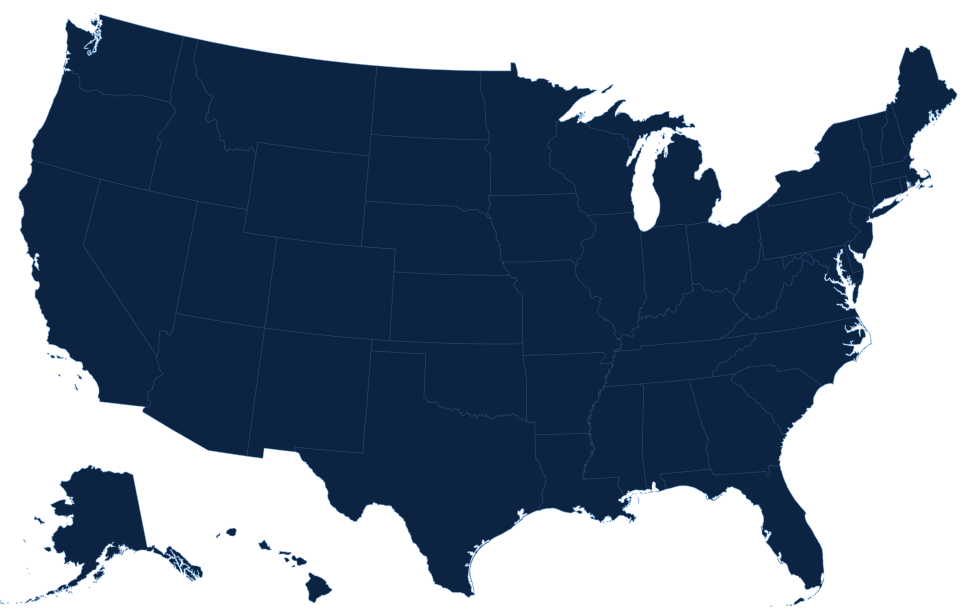
We are currently evaluating projects in Northern and Southern California, and repurposing existing real estate in metro areas for AI inference workloads. Specific projects will be disclosed shortly.

Our evaluations consider not only access to power, but how existing buildings, electrical infrastructure and cooling systems can be adapted to support energy- and resource-efficient, workload-appropriate compute. Water availability, cooling-related water consumption and local resource constraints are material factors in our site selection and design decisions.

Approximate regional markers; specific project locations are not disclosed.

Regions under evaluation

  1. Northern California

    Status: Under evaluation

  2. Southern California

    Status: Under evaluation

Good neighbors build better infrastructure.

Responsibility is a design input, not a closing statement. These principles shape how we intend to evaluate, plan and operate every project.

i.Land use & reuse
Favor previously developed sites and existing buildings where suitable, and plan layouts, setbacks and landscaping that respect the surrounding environment.
ii.Water stewardship
Evaluate cooling strategies against local climate, water availability and workload requirements, balancing energy performance, water consumption and reliability. Prioritize approaches that reduce demands on local water resources where technically and economically appropriate.
iii.Energy & resources
Coordinate electrical and cooling design to make efficient use of energy and materials appropriate to each site.
iv.Noise & visual
Consider equipment selection, orientation and screening early to limit sound and visual effects on neighbors.
v.Utility coordination
Work alongside utilities and grid operators to plan load responsibly and support system reliability.
vi.Community engagement
Engage early and transparently with local residents, officials and stakeholders, and keep communication open through delivery.

Experience across energy infrastructure,
development, finance and AI.

Portrait of Marc J. La Magna

Founder and Chief Executive Officer

Marc J. La Magna

Marc brings together experience in energy infrastructure development, artificial intelligence and capital formation. His career spans power project finance, energy storage, venture investing and corporate development — connecting the physical infrastructure advanced computing requires with the capital and strategy needed to bring it to market.

  • Energy storage development
  • Power project finance
  • AI corporate development
  • Venture investing

Additional leadership to be announced

Turnstone Digital is building a team with deep experience across power, development, engineering and community partnership.

Let’s build what comes next — responsibly.

We welcome conversations with landowners, utilities, communities, capital partners and compute users who share a long-term view of AI infrastructure.

Contact us

Required